
Criminal Cases in the Martin County Courts
Martin County has two trial levels at one courthouse. District Court hears misdemeanors, infractions, first appearances, and the early steps in felony matters. Superior Court hears felony trials and misdemeanor appeals for a new trial. Town ordinance and traffic cases also enter the state District Court system. Williamston, Robersonville, and Jamesville do not operate separate municipal criminal courts. A January 2025 Judicial Branch notice identifies Thomas Anglim as the district attorney appointed for Prosecutorial District 2.
The Clerk of Superior Court keeps both sets of Martin County criminal case records. A December 2024 Judicial Branch notice records the start of Martin County's new clerk. The case file differs from a sheriff report or jail booking because it shows what prosecutors filed and what the court did. The arresting agency still holds its incident narrative, while the regional jail holds intake and custody facts. Readers moving from an arrest allegation to the final outcome should rely on the clerk's judgment or dismissal.
The Judicial Branch's Martin County court contact directory identifies the local clerk and court offices.
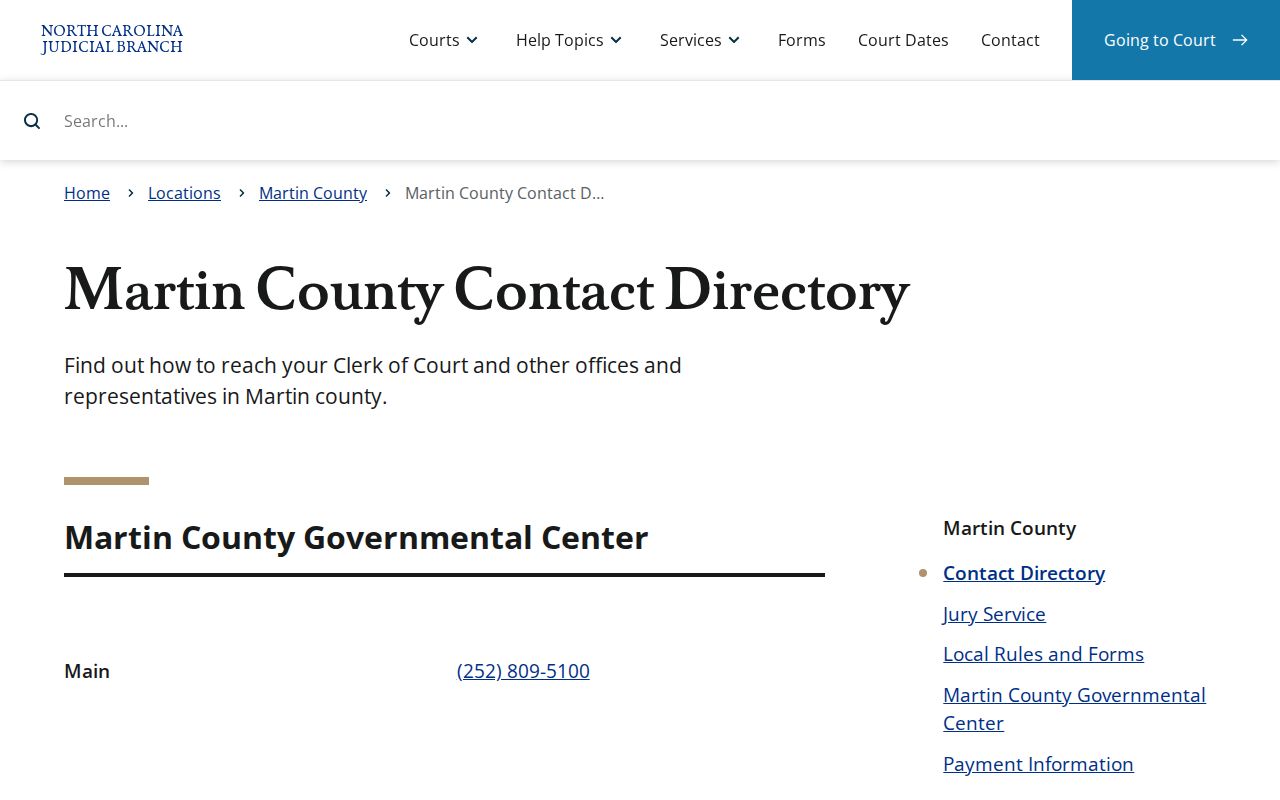
That directory is the sound starting point when a Martin County court record needs an office-specific answer.
Martin County Criminal Court Levels
A charge's court level turns on its type and stage. A misdemeanor generally stays in District Court unless appealed after judgment. The misdemeanor punishment statute separates Classes A1 through 3. A felony begins with preliminary work in District Court, then moves to Superior Court for trial if it proceeds. The felony sentencing grid combines offense class with prior-record level. This split explains why one Martin County case can show events tied to more than one stage without creating a separate local court system.
Case numbers, charge classes, and status fields help locate the right record. Still, a class shown at arrest is not always the final class. Prosecutors may amend, replace, or dismiss counts. When a Portal result lists several case numbers, open each one and compare offense dates, filing agencies, and dispositions. “Closed” describes status. It does not, by itself, mean that the case ended in conviction.
How to Search Case Records
The North Carolina eCourts Portal is the main remote path for a Martin County criminal case search. Basic public access is free and does not require registration. Search results can still omit document images or confidential details. The clerk's public kiosk and counter fill those gaps.
- Open the official eCourts Portal and choose the case or Smart Search path.
- Enter a case number when known. For a name search, add first and middle names.
- Select Martin as the county and use a filing or hearing date range when useful.
- Open the case summary, charges, events, hearings, disposition, and financial entries.
- Ask the Martin County clerk for a copy, archived file, or certified search when the online view is not enough.
| Field Label | Type | Required | Notes |
|---|---|---|---|
| Search Type | Tab or dropdown | Yes | Cases, calendars, hearings, or citation paths |
| Case Number | Text | No | Best exact identifier |
| Last or Business Name | Text | Conditional | Add first and middle names to narrow |
| County | Dropdown | No | Select Martin for a county search |
| Citation Number | Text | Conditional | Use the exact number for citation records |
| Date Range | Date fields | No | Used in calendar and hearing paths |
Search by case number when possible. A name-only result can join the wrong person to a Martin County criminal case, especially when several entries share a common name. Verify the county, filing date, charge sequence, and final disposition. If those fields still leave doubt, take the case number to the clerk rather than guessing from the index.
Martin County eCourts Record Access
North Carolina completed its statewide Odyssey conversion in October 2025. That makes older advice about legacy court terminals stale. The current North Carolina eCourts Portal supplies case search, court calendar, hearing, citation, and eligible payment paths. Public access is tiered, so an indexed Martin County criminal case does not guarantee that each pleading can be downloaded.
The portal works best when the searcher carries more than a name. Collect the middle name, approximate age, case number, county, and filing period. Compare the public charge history and disposition before deciding that an entry belongs to the person sought.
The official clerk criminal-record search page explains the clerk's separate search product.
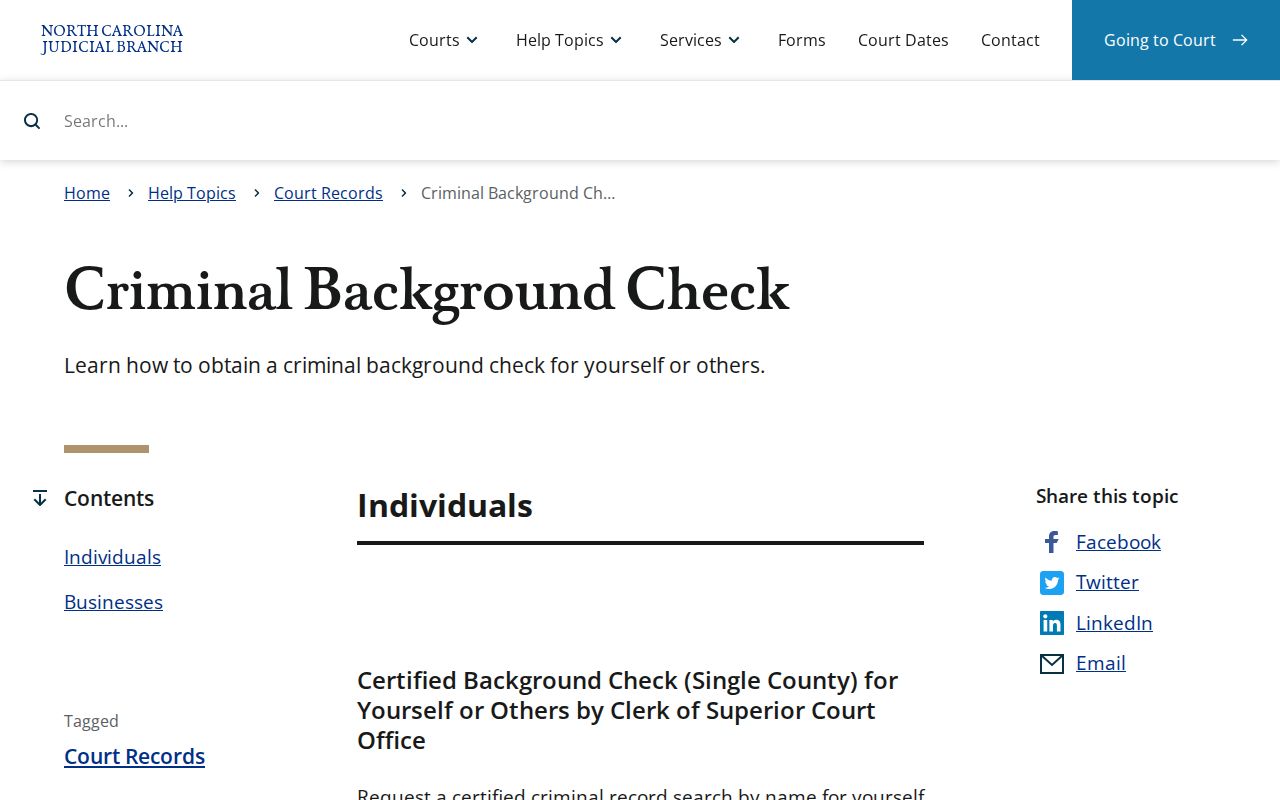
This channel matters when a signed or certified Martin County court search is needed rather than a screen view.
What the Case File Shows
A Martin County criminal case file links the filed accusation to its result. Its value lies in the sequence. Initial counts may be changed, hearings may be continued, and the final judgment may differ sharply from the first allegation. An indexed case can also have restricted images, so the clerk remains the source for documents that public access permits but Portal does not display.
| Case Number & Court | County, court level, case type, filing date, and status |
|---|---|
| Charging Record | Count, offense, statute or code, class, date, agency, and charge status |
| Docket Entries | Filed papers, issued or served process, settings, continuances, pleas, and orders |
| Hearing Dates | Date, time, courtroom, hearing type, and assigned judicial officer when public |
| Disposition & Judgment | Dismissal, plea, verdict, final count, or other recorded outcome |
| Sentence & Conditions | Sentence terms, compliance events, assessments, payments, and balances when available |
Sealed, expunged, juvenile, victim-sensitive, and confidential data do not become public merely because another part of the case has an index entry.
Martin County Court Kiosk Options
The public-access kiosk and clerk counter are at the Martin County Governmental Center, 305 East Main Street, Williamston. The clerk's main number is 252-809-5100, and published hours are weekdays from 8:00 a.m. to 5:00 p.m. A kiosk can support viewing and searching without remote registration. The counter is the better route for certified copies, archived material, unclear case numbers, and documents hidden by remote access tiers.
The Judicial Branch offers a certified criminal-record search using form AOC-CR-314 for a published fee of $25. Specify whether the request is for Martin County or the official statewide clerk process. For historical or genealogy work, ask if the older case is on paper, microfilm, or in another archive. A missing remote image is not proof that the source file vanished.
Stages of a Criminal Case
A Martin County criminal prosecution begins when charges are filed, not merely when a person is booked. District Court handles arraignment and early felony matters, while Superior Court handles a felony trial if the case advances. Pretrial motions, plea talks, continuances, and amended counts can alter the public docket before judgment.
Case flow: Charges Filed › Arraignment › Pretrial › Plea or Trial › Disposition › Sentencing
Each stage leaves a different kind of entry. A hearing date shows a scheduled event, not its outcome. A plea or verdict resolves guilt on a count. The judgment records the court's final terms. When a disposition has not reached a fingerprint-supported SBI record, keep the certified Martin County judgment and use the SBI written-exception process for one's own record.
Martin County Criminal Court Calendars
Calendars answer a narrower question than a full docket: when and where a matter is set. Use the North Carolina court-date search with the person's name, county, and date range. Then open the Martin County case in Portal to read charge and disposition fields. Calendar placement can change, so confirm a required appearance with the clerk.
The official North Carolina court-date interface offers a focused view of scheduled proceedings.
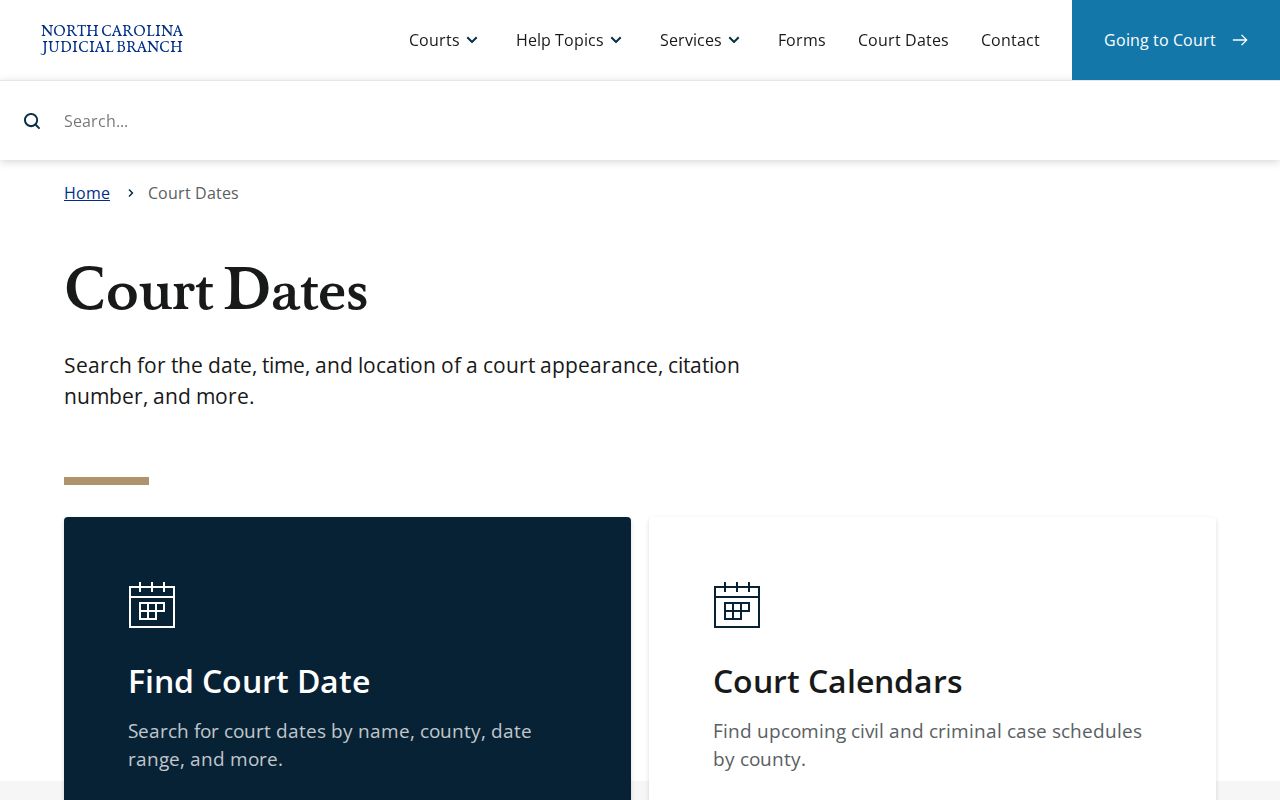
Its date-focused results should be paired with the case file rather than read as a final Martin County court outcome.
For local calendar links, begin at the Martin County criminal calendars page. The separate Martin County jury service page addresses juror duties rather than access to a defendant's case file.
Access & Restrictions
North Carolina law generally opens court records to inspection, but not every field or document is public. Sensitive identity data is redacted. Juvenile, sealed, expunged, and victim-protected material can be restricted. Unreturned or sealed process may also be absent even when returned warrants later become public court records. Portal access reflects these limits.
Police investigation files follow a different rule. The broad investigative narrative is not an ordinary public record, though specified arrest and event facts remain public under G.S. 132-1.4(c). Ask the arresting agency for those facts and the Martin County clerk for the filed judicial record. Do not send a police-report request to the Judicial Branch and expect it to retrieve an agency file.
Martin County Judicial Record Requests
The clerk should receive requests for a particular Martin County case copy or certified disposition. The Judicial Branch's administrative request form serves a different role. It covers judicial administrative records and is not a substitute for asking the county clerk to copy a case file. Making that distinction prevents a common routing delay.
The official Judicial Branch public-record request page explains which records belong with courts, law enforcement, or local government.
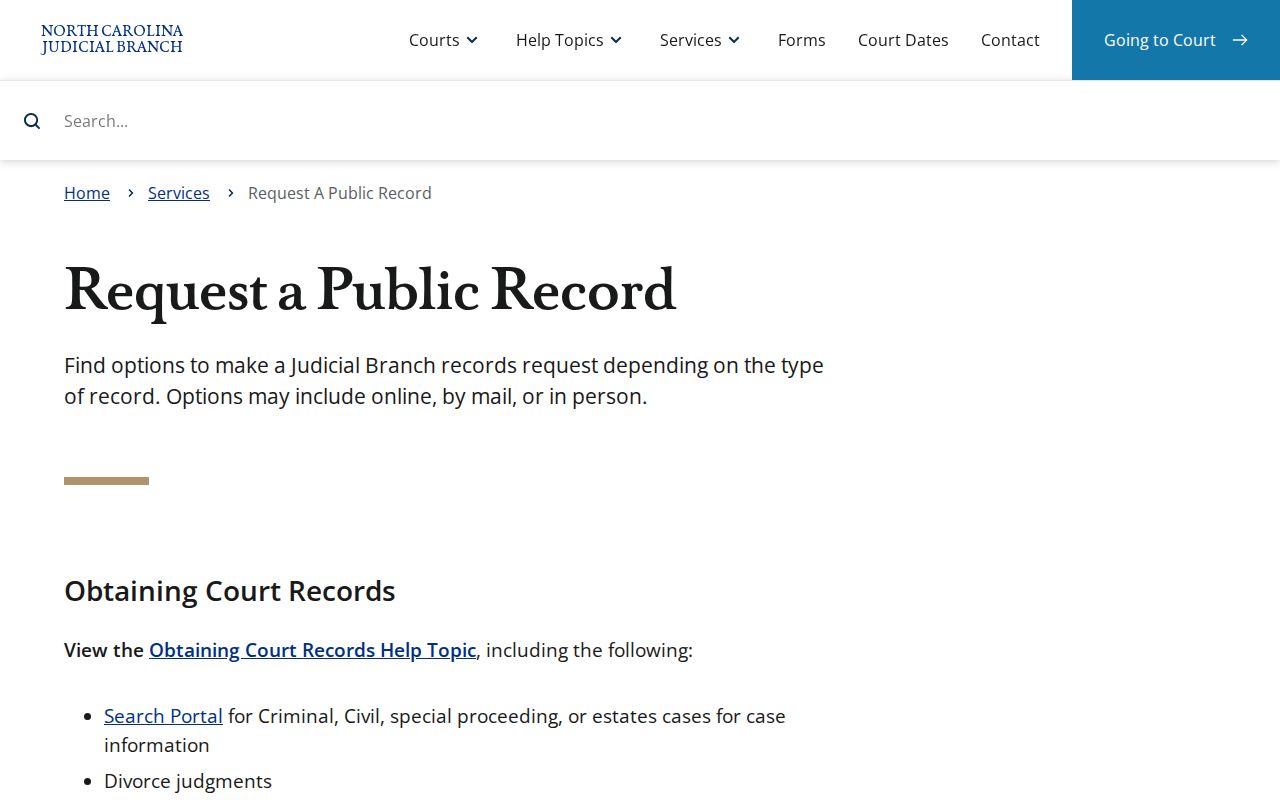
Its routing guidance helps send a Martin County request to the office that actually holds the record.
When requesting a case copy, provide the case number, party name, filing year, county, and exact document sought. Ask about copy cost and certification before production. If Portal shows a case but no image, say so. For a denial or redaction, ask which rule controls and whether a public or redacted portion can be supplied.